
No products in the cart.
Diwali 2026 Puja Samagri Checklist: Everything You Need for Lakshmi Puja at Home
There’s a quiet, sacred joy that settles over the home on Diwali evening. The aroma of fresh marigolds mixes with sweet dhoop, brass diyas begin to glow softly, and the mandir is lovingly set up for Lakshmi-Ganesh Puja. But as any family knows, nothing disrupts that serene festive feeling faster than realizing at 6:00 PM that you forgot cotton wicks, kalash water, or kumkum!
Arranging your puja samagri a few days in advance isn’t just about logistics—it’s about creating a peaceful, stress-free space so you can focus entirely on devotion and family togetherness.
Whether you’re setting up your very first independent Lakshmi Puja or managing a large family ritual, this complete Diwali 2026 Lakshmi Puja Samagri Checklist will keep your preparations organized and graceful.
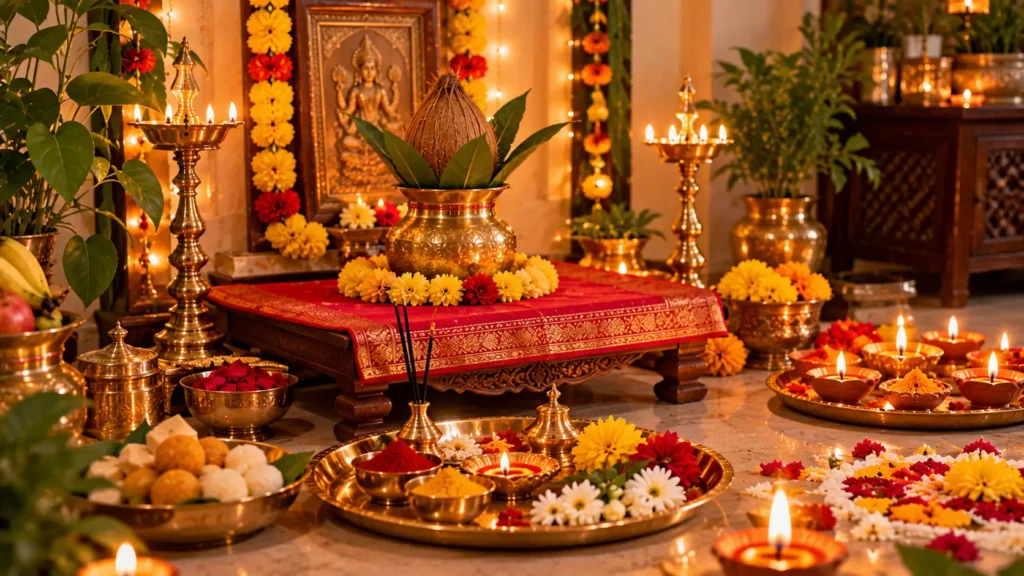
📌 A Gentle Reminder: Ritual practices vary beautifully across regions and family traditions. Use this checklist as a flexible, helpful guide rather than a strict set of rules—always honor the specific vidhi passed down in your household.
When Should You Prepare for Lakshmi Puja 2026?
Because Hindu lunar dates (tithis) and local muhurat windows depend on regional Panchang calculations, always double-check the precise timing for your city (such as Pune/Mumbai timings) a few days prior.
- Non-perishable essentials: Gather 2 to 3 days before Diwali.
- Fresh offerings (flowers, sweets, leaves): Pick these up on the morning of Diwali.
Complete Lakshmi Puja Samagri Checklist
Print or save this list to check off items as you gather them for your altar.
1. Basic Mandir & Altar Essentials
Start with the foundational pieces needed to set up a clean, dignified worship area.
- Clean Puja Chowki / Chauranga (wooden elevated platform)
- Fresh Red or Yellow Velvet / Cotton Cloth to cover the chowki
- Brass or Copper Puja Thali
- Small Puja Bowls (Katori) for holding kumkum, haldi, and offerings
- Brass Hand Bell (Ghanti)
- Kalash (copper or brass pot) with a small Panchapatra & Pali (water vessel & spoon)
- Matchbox or Lighter (stored safely away from children)
- Clean cloth or napkins reserved specifically for wiping deity idols and altar surfaces
👉 Browse hand-carved wooden Puja Chowkis
2. Items for Worshipping Goddess Lakshmi & Lord Ganesha
The sacred items used directly during the invocation and worship of Goddess Lakshmi and Lord Ganesha.
- Lakshmi & Ganesha Idols (or pictures)
- Lotus Aasan Mat (decorative base placed beneath the deities)
- Kumkum (vermilion) and Haldi (turmeric powder)
- Akshat (unbroken raw rice grains mixed with a pinch of turmeric)
- Chandan (sandalwood paste) & Abir/Gulal
- Moli / Kalava (sacred red thread)
- Attar (natural floral perfume oil)
- Yajnopavita / Janve (sacred thread offering for Lord Ganesha)
👉 Discover handcrafted Lotus Aasan mats and deity accessories.
3. Diyas, Oils, and Lighting Setup
Lighting lamps is the heart of Deepavali—symbolizing the destruction of ignorance and the arrival of pure wisdom.
- Traditional Terracotta Clay Diyas (enough for the mandir, windows, and main doorway)
- Main Brass Kuber Diya or Pancha Aarti Diya
- Cow Ghee or Sesame/Mustard Oil for fuel
- Pure Cotton Wicks (Rui Batti)—both round and long varieties
- Akhand Jyot Diya with a protective glass chimney (if your family maintains an ongoing flame)
- Brass Diya Tray for safely carrying lit oil lamps around the home
👉 Explore traditional diyas and Akhand Jyot lamps.
4. Entrance & Altar Decorations
A clean, welcoming threshold invites divine energy and warmth into the home.
- Fresh Flower Garlands (marigolds, rose petals, and lotus flowers)
- Mango Leaves or Betel Leaves for the kalash and entrance
- Main Doorway Toran (marigold, mango leaf, or embroidered fabric)
- Rangoli Setup (powder colors, stencils, or a reusable MDF Laser-Cut Rangoli Kit)
- Akash Kandil / Sky Lantern for the balcony or porch
👉 Shop decorative Entrance Torans
5. Bhog, Naivedya & Sacred Offerings
Pure food offerings express gratitude for the household’s health and sustenance over the past year.
- Fresh Fruits (especially bananas, pomegranates, apples, and a coconut for the kalash)
- Traditional Festive Sweets (Laddoo, Kaju Katli, or homemade Faral)
- Batasha (sugar drops) & Kheel (puffed paddy rice)
- Dry Fruits (cashews, almonds, raisins, dried dates)
- Paan Leaves & Betel Nuts (Supari)
- Panchamrit (sacred mixture of milk, curd, honey, ghee, and sugar)
👉 Shop from our Fresh food collection
6. Optional Items (As Per Family Custom)
Depending on your regional heritage or specific family vidhi, you may also need:
- New Account Books (Chopda) for business owners performing Chopda Puja
- Silver/Gold Coins depicting Lakshmi-Ganesha motifs
- Havan Samagri, Dry Coconut (Gola), and Havan Kund (only if a family havan is conducted in a well-ventilated space)
- Printed Lakshmi Puja Aarti Book / Chalisa
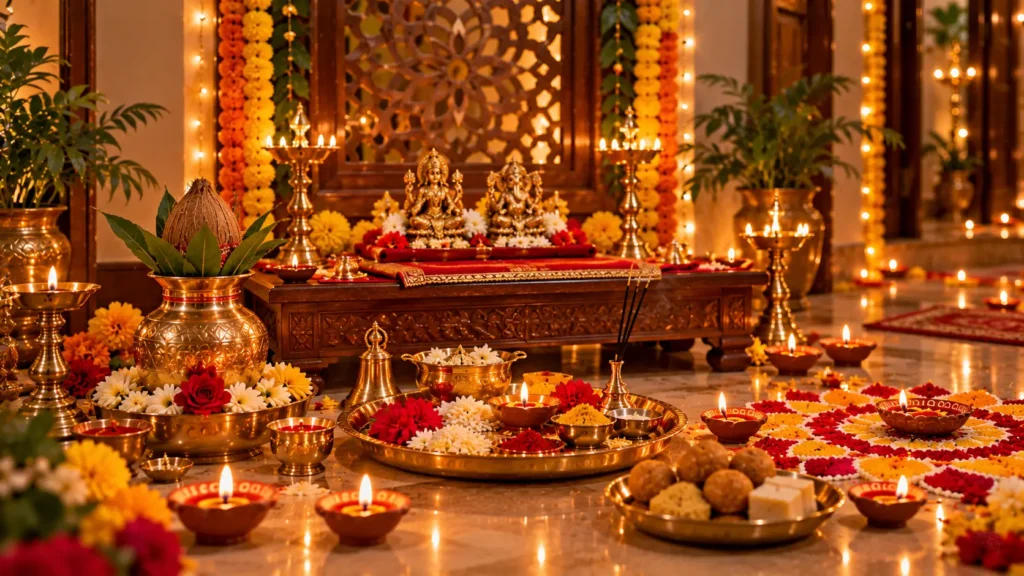
Step-by-Step Preparation Timeline: Stay Stress-Free!
🗓️ 2 to 3 Days Before Diwali and 1 Day Before Diwali Preparation
- Audit your home mandir: See what brassware needs polishing and what diyas can be reused.
- Order any missing non-perishable decor, chowkis, torans, or brass items online.
- Confirm exact Lakshmi Puja muhurat timings for your specific city.
- Thoroughly clean the puja room or designated altar space.
- Wash, dry, and wipe down all brass and copper vessels.
- Soak new clay diyas in water for a few hours, then let them dry completely so they don’t absorb excessive oil during puja.
🗓️ On Diwali Day (Morning & Afternoon)
- Pick up fresh marigold garlands, lotus flowers, fruit, and fresh sweets.
- Place your chowki, drape the cloth, and arrange the idols, Lotus Aasan, and toran.
- Keep wicks, oil, kumkum, and lighter neatly organized on your puja thali so everything is within arm’s reach.
5 Common Preparation Mistakes to Avoid
- Rushing at the Last Minute: Purchasing wicks and camphor on Diwali evening leads to unnecessary stress. Keep your samagri tray ready by noon.
- Ignoring Fire Safety: Never place open-flame diyas directly beneath fabric torans, paper lanterns, or fluttering window curtains. Always place oil lamps on heat-resistant trays or wooden chowkis.
- Overcrowding the Chowki: Keep the main puja platform tidy. Place extra bhog plates and water vessels on side tables if space is tight.
- Using Generic Timings: Always check your local Panchang! Muhurat windows calculated for North India or international cities differ from local timings in Maharashtra or South India.
- Overspending on New Items: Remember that clean, well-cared-for items from previous years carry beautiful family memories. Only buy what you genuinely need or want to refresh.
Frequently Asked Questions
1. What are the absolute minimum essential items for Lakshmi Puja?
If you’re keeping it extremely simple, all you truly need are idols or pictures of Goddess Lakshmi & Lord Ganesha, a clean chowki with a cloth, a diya with oil/ghee, kumkum, rice (akshat), fresh flowers, water, and a sweet offering.
2. Can I reuse brass diyas and puja thalis from previous years?
Yes, absolutely! Cleaning and reusing brass vessels and chowkis is customary. Just ensure they are washed thoroughly before the festive rituals begin.
3. Where should I place the main Lakshmi Puja setup in my house?
According to Vastu traditions, placing your puja altar in the Northeast (Ishan Kona) or East quadrant of your home brings harmonious energy. Ensure you sit facing East or North while performing prayers.
Welcome Prosperity with Peace & Joy
Preparing for Diwali doesn’t have to feel overwhelming. When your altar is organized and your samagri is prepared ahead of time, you create space to truly soak in the spiritual warmth, family laughter, and radiant beauty of Deepavali.
May Goddess Lakshmi and Lord Ganesha bless your home with health, peace, and abundance this Diwali 2026!

 All rights reserved
